Zara Integrated Marketing Campaign
Research Goals
The core problem we identified is that MSU students lack convenient access to trendy, affordable clothing on Grand River. People need outfits for interviews, going out, classes, and everything in between, but the stores near campus don’t match students’ style or price range. Because of that, most students end up shopping online, and if they can drive 5-10 minutes to the mall. Since a lot of students already know about Zara, our problem is figuring out if a Zara on Grand River would fill that gap and actually give students the kind of clothing store they’ve been wanting.
Research Methods
-
We recruited eight MSU upperclassmen who live and shop off campus to represent the target demographic for a focus group about Zara. A moderator guide steered the discussion toward the potential of Zara opening a presence at MSU. Participants were asked about shopping frequency and their preference for in-person versus online shopping. The group was also questioned about their awareness of Zara’s marketing and whether it affected their shopping choices. Findings provided insight into how Zara might be perceived on campus and suggested strategies to boost student engagement and store traffic.
-
To evaluate the potential for a Zara on Grand River, we conducted ethnographic observations of existing local retailers like Target and Rally House during peak hours. The study found that female students typically shop in groups, which encourages spontaneous purchases and social trying-on of clothes, while male shoppers tend to be more mission-oriented. Price sensitivity is a major factor, with students consistently checking tags and gravitating toward clear "sale" or "new arrival" signage. Key drivers for purchasing include store organization, attractive displays, and the availability of fitting rooms to help with decision-making. Conversely, students are deterred by high prices, cluttered layouts, limited sizing, and long wait times caused by overcrowding. Ultimately, these findings suggest that students value a balance of trendy styles and affordability. Therefore, a well-organized Zara that prioritizes efficiency and trendiness would likely thrive in the East Lansing market.
-
To evaluate whether a Zara location would be beneficial on Grand River, we surveyed multiple college students across campus to get their input. The goal was to understand current shopping behaviors, brand awareness, and interest in Zara as a brand. Our findings found that 98.4% of respondents wished there were more options for clothing stores on Grand River. 77.5% of our target audience is women, and 55% of higher spenders say that having a Zara on campus would be beneficial to them. Overall, the research suggests that a Zara presence on or near campus would meet a clear student demand for trendy, reasonably priced clothing in a convenient location.
The Results
-
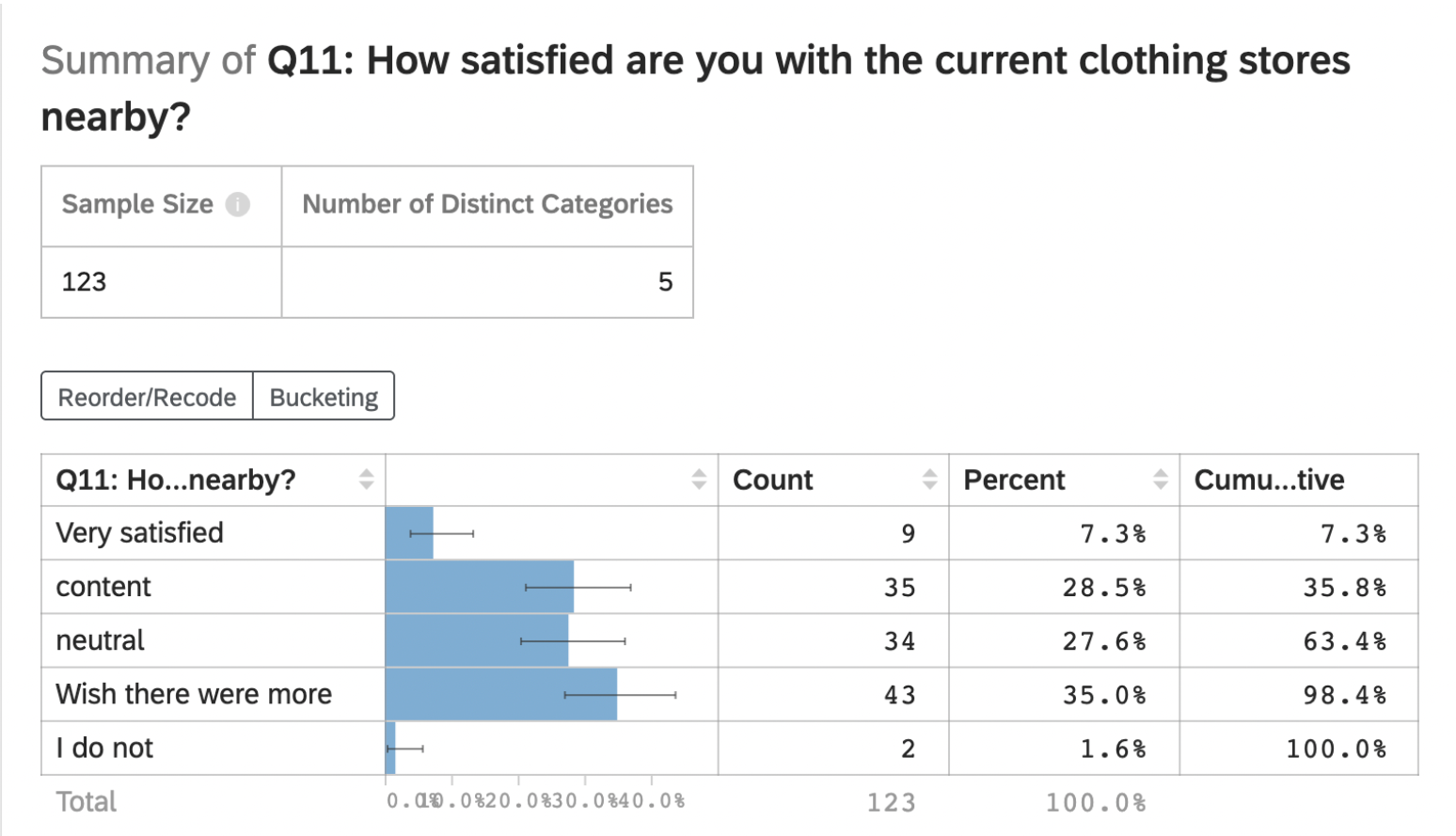
How satisfied are you with the current clothing stores nearby?
Mean: 3.05, people tend to hover around neutral and content.
The largest group of people that wish there were more clothing stores nearby, currently spend time on Grand River every day or almost every day
-
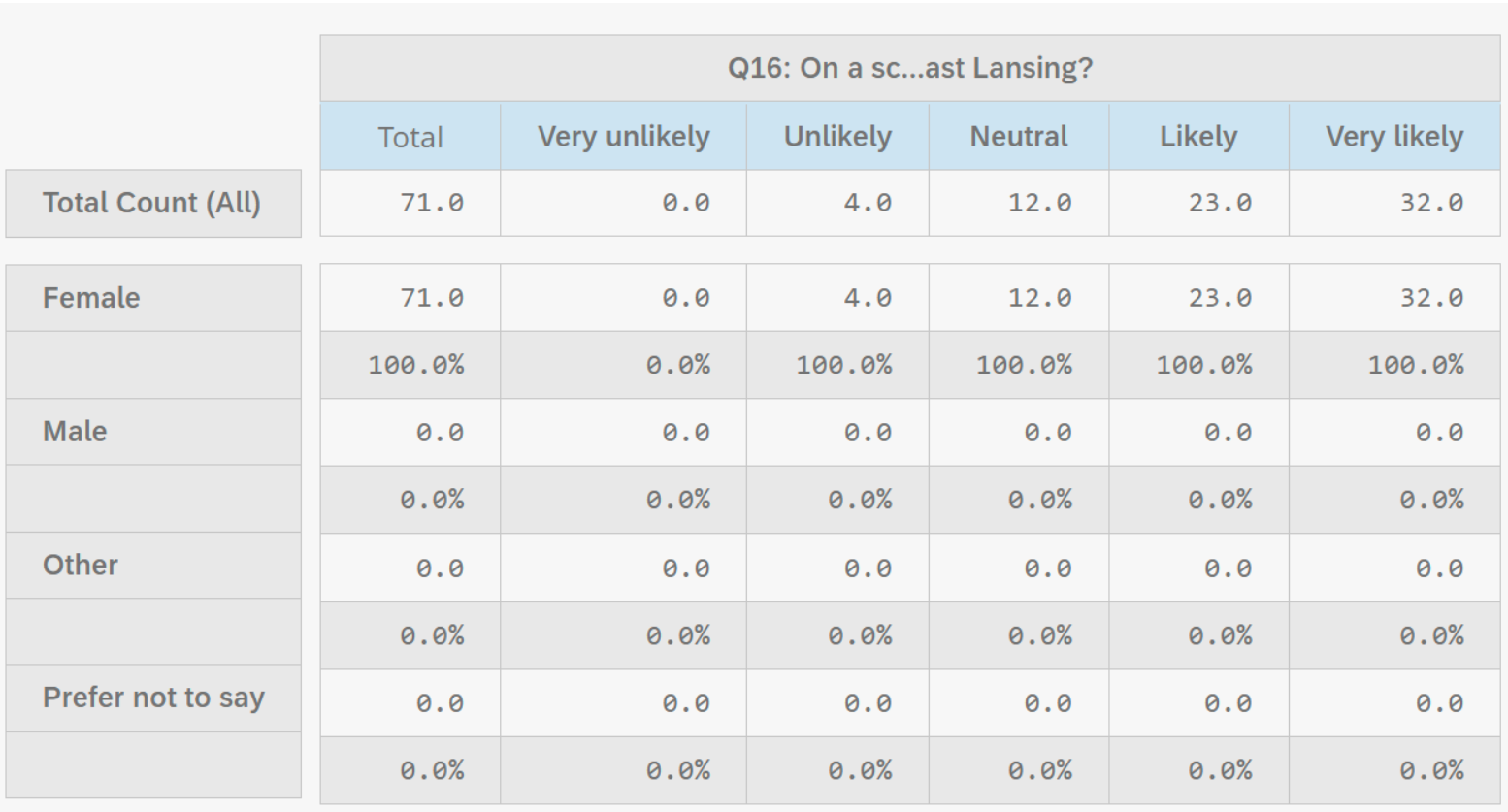
On a scale of 1-5 how likely would you shop and Zara if there was one on Grand River?
The data shows that the majority of the 71 female respondents selected Likely (23.0) or Very likely (32.0). Together, these two categories account for 23.0 + 32.0 = 55.0 responses, or 32.4% + 45.1% = 77.5% of the total responses. This tells us that the majority of Zaras' audience in East Lansing would be women.
-
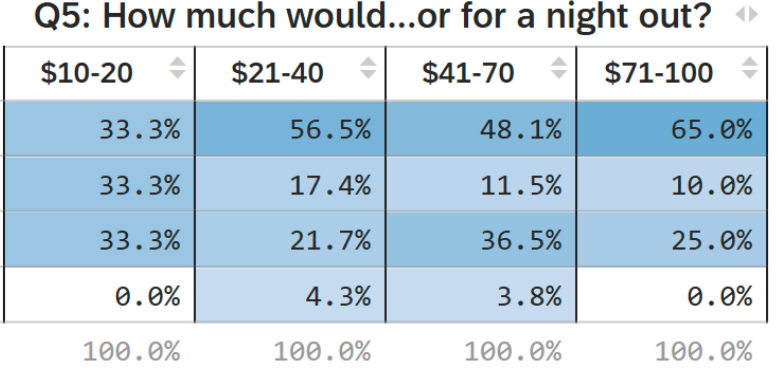
How much would you be willing to spend for a night out or special event?
Higher spenders are most likely to say Zara would benefit them. Even amongst lower spenders, the interest is high but certainty may decrease. 55%+ strongly support Zara, only 2–3% oppose it. Many believe that a Zara would be beneficial with only a small amount (2.5%) saying that it would not. Those who do not think it would be beneficial to them are more often the people who said they would spend the least amount of money on clothes.
CREATIVE BRIEF
Tone and Style
Modern, confident, and inclusive
Reflective of college student energy and city lifestyle
Clean, minimalist visuals using Zara’s neutral color palette (white, beige, black)
Conversational yet aspirational language “everyday style meets downtown energy”
Conclusion
We found that students appreciate Zara’s trend-driven clothing and generally view its pricing as moderate. Our research also explored the potential for a store near MSU, and survey results indicated strong interest in a conveniently located, campus-adjacent location. Additionally, social media emerged as a key driver of brand awareness and engagement for this demographic.
Ethnographic observations and in-depth interviews confirmed that students are drawn to Zara for its style and trendiness, though some remain cautious about its prices and sustainability. Survey results also showed that while many students currently only shop at Zara occasionally, they are highly motivated by aesthetics and social media influence.
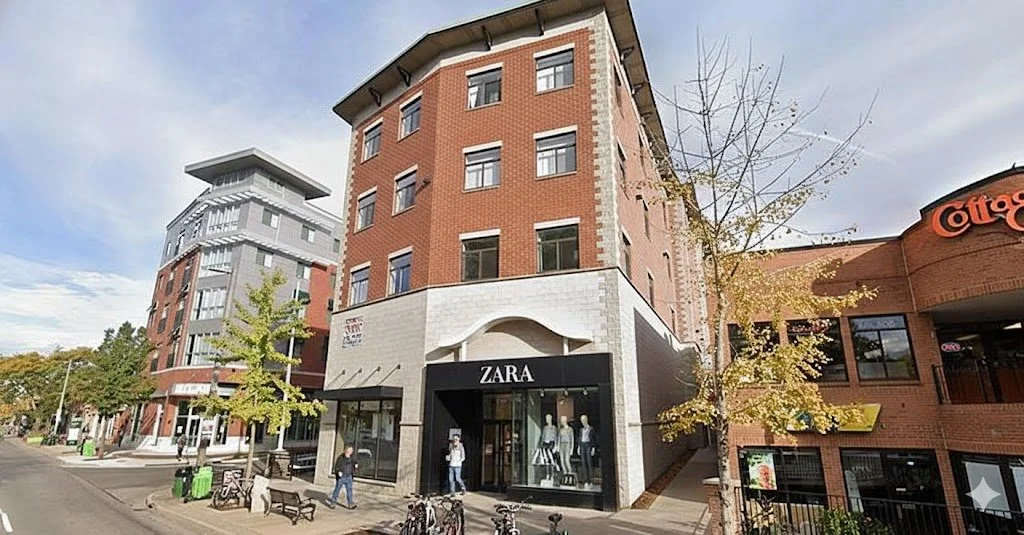
Based on these findings, opening a Zara location near MSU campus could be a promising opportunity. With the right location and marketing approach, a Zara store in East Lansing has the potential to appeal to college students and fit in well with the local retail landscape.
Strategies
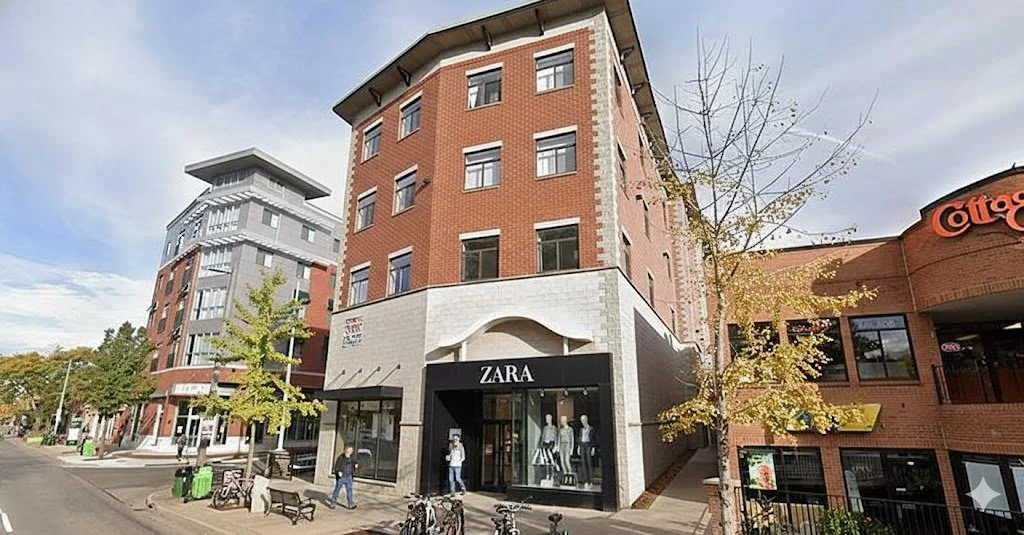
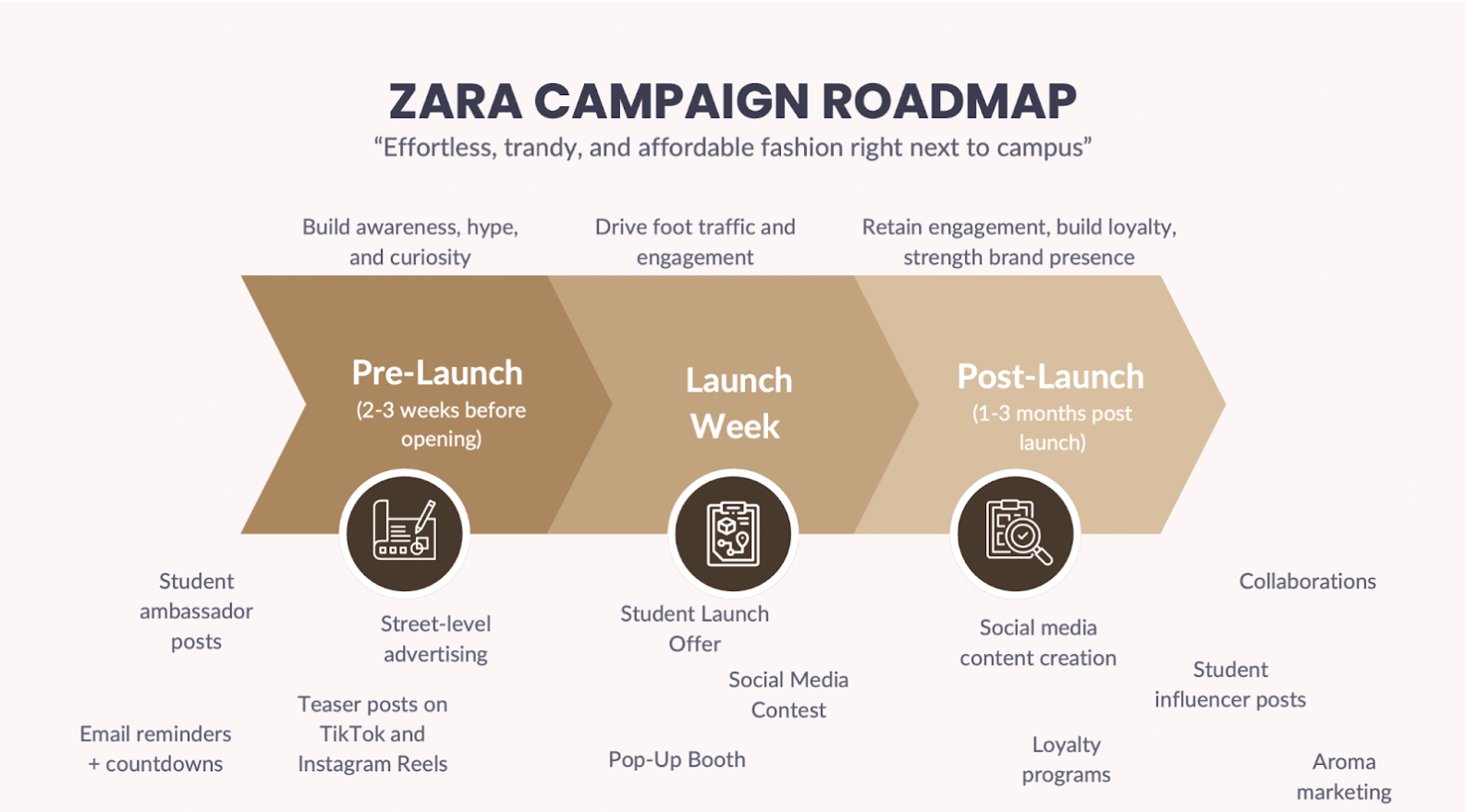
Localized Connection: Emphasize Zara’s arrival as a new East Lansing staple on Grand River.
Digital Integration: Use TikTok and Instagram Reels to connect with MSU’s highly engaged student community.
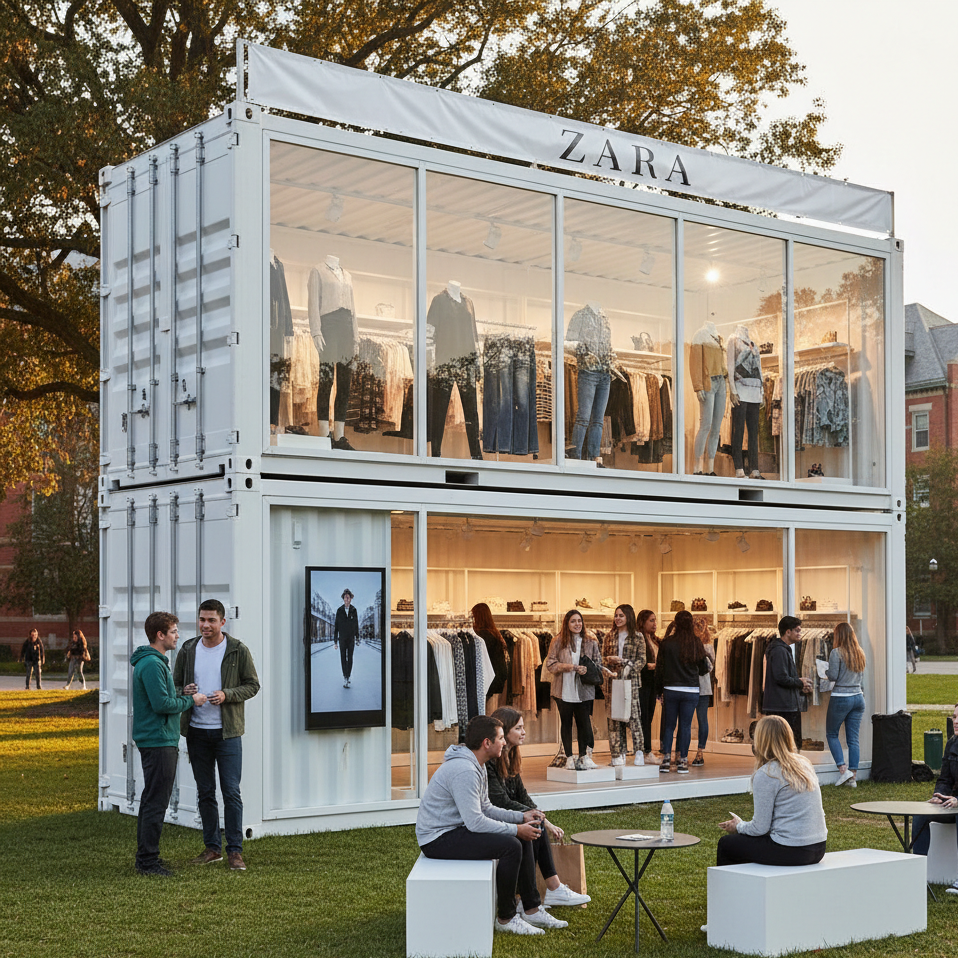
Experience-Driven Marketing: Blend online trends with real-world interactions through pop-ups and giveaways.
Peer Influence: Partner with MSU student ambassadors and local influencers to boost authenticity and trust.
Value Messaging: Highlight affordability and versatility for class, interviews, and social life.